What expires first is what you should see first
A pharmacy, its stockroom and its shelves of parapharmacy: the hard part is not counting boxes, it is the date printed on them — and knowing it before a customer does.
Expiry checking is done by hand, shelf by shelf, on the quietest afternoon of the month. It holds until a month comes in busy: then nothing gets checked, and what nobody saw is thrown away — bought, stored and never sold.
The system a pharmacy already runs knows about dispensing and prescriptions. It does not know which drawer a box is in, how much of a parapharmacy line is left in the back, or which lot has to leave before the one sitting behind it.
-
01
What expires in thirty days, counted on opening
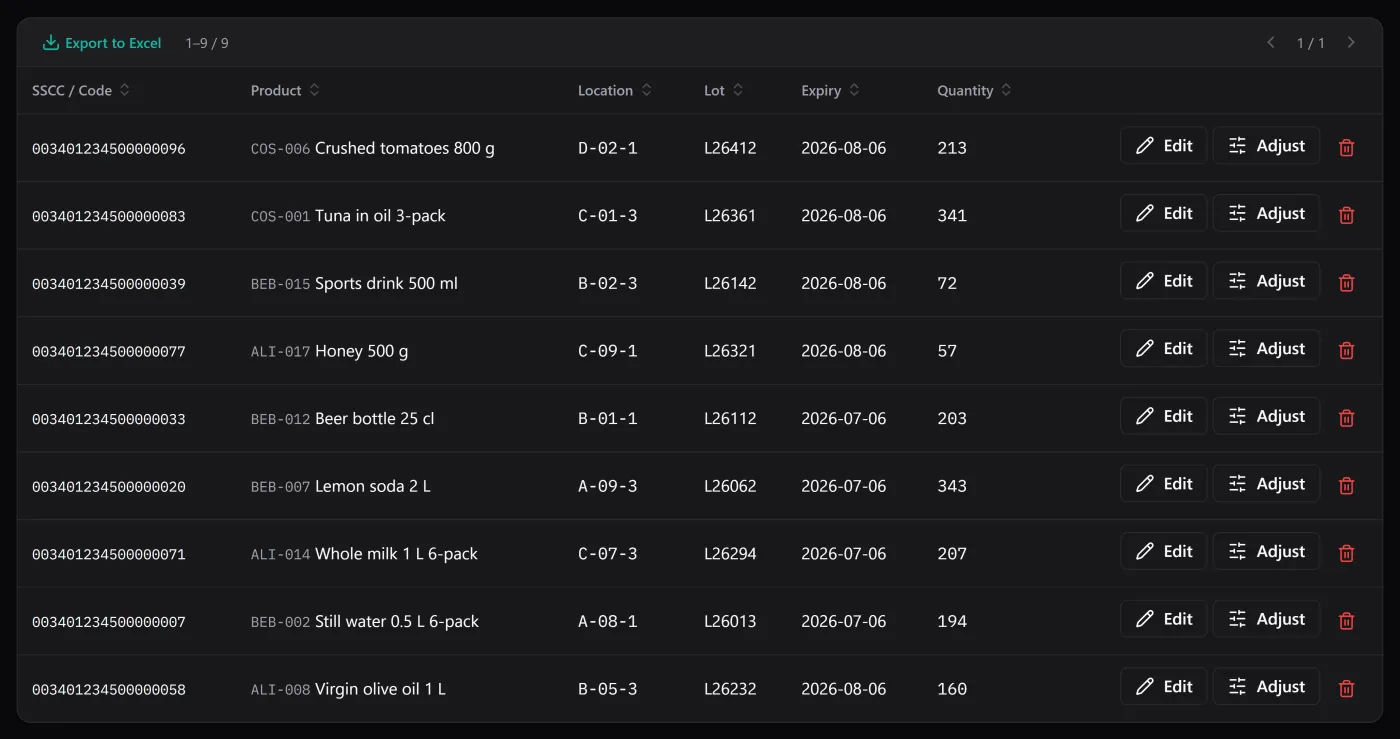
The dashboard counts the stock that expires within thirty days and the list filters to exactly that, every line with its lot and its location. The check becomes a screen you read instead of an afternoon you spend.
-
02
Lot and expiry where they are compulsory
Turn lot and expiry on product by product: stock of a product that requires them cannot be registered without them. The rest of the catalogue — a hairbrush, a box of gloves — stays simple.
-
03
Every box has an address
Aisle, column and height work as well for a wall of drawers as for racking, and the code is searchable, so “where is it?” is a search rather than a walk to the back.
-
04
What left, when and why
Withdrawals, breakages and returns are movements with a reason, and each one keeps the lot it touched at the time, so what you pulled off the shelf six months ago is still readable today.
Where it stops It is not a pharmacy management system: BasicInventory does not dispense, does not bill prescriptions, does not connect to any medicine verification service or pharmacy network, and does not read barcodes. It is one person on one Windows computer, keeping the stockroom and the parapharmacy behind the counter straight.