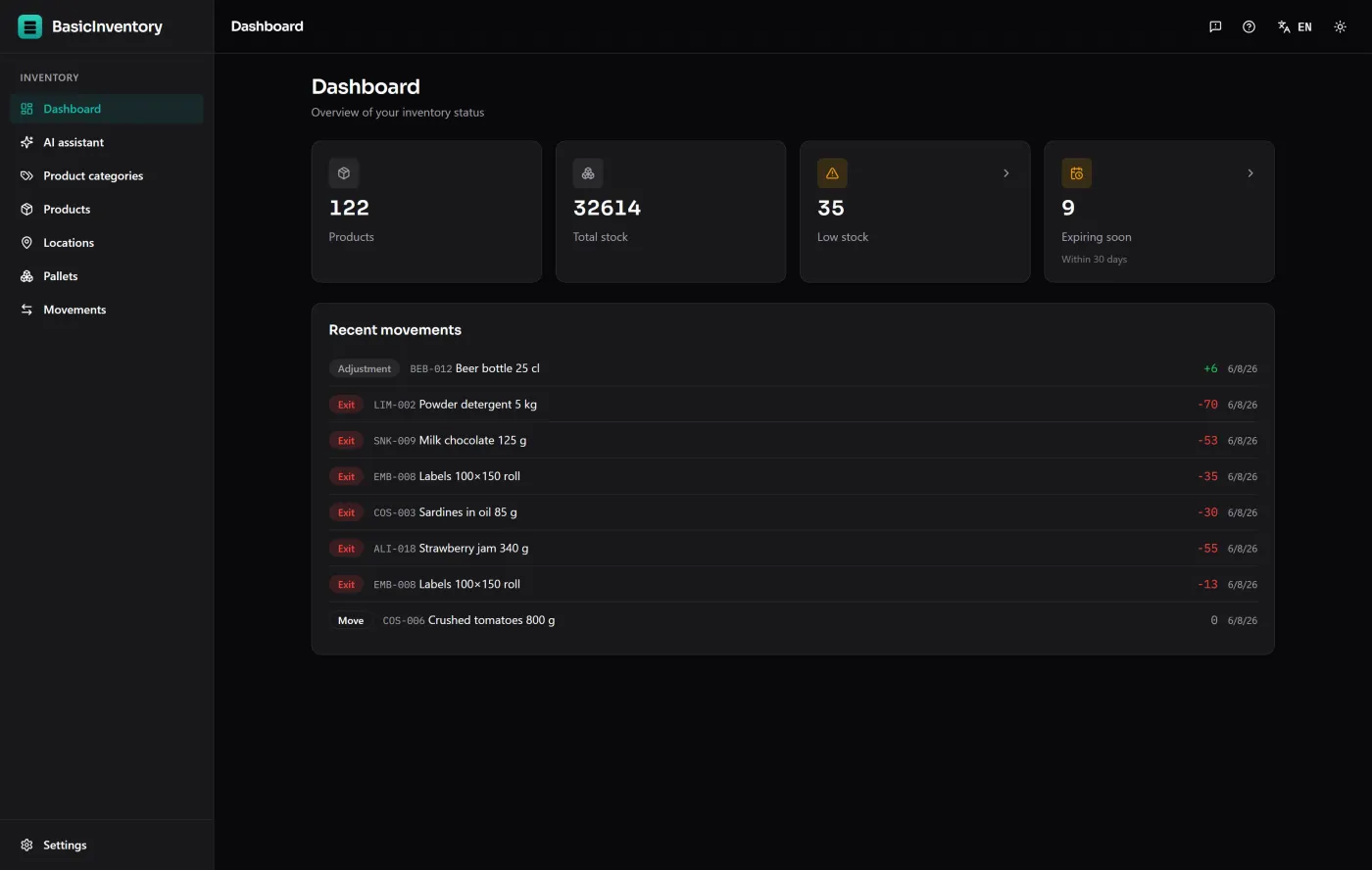
Almost all inventory software is now sold by the month. Inventory software with no subscription — buy it once, own that copy — has become the exception, and it’s worth understanding why the exception exists and when it’s the better deal. This is a plain, brand-free comparison of the two models: what you actually pay, what you give up, and who each one suits.
The arithmetic first
A subscription looks small on the page and large over time. €15 a month is €180 a year, €540 over three years, €900 over five — and it never stops, because the day you stop paying you lose access to the tool your stock lives in. That is the model’s real feature from the vendor’s side: recurring revenue, and a cost of leaving that keeps you in.
A one-time purchase is the opposite shape. You pay once, and the copy is yours to keep using. There’s no monthly line on the bank statement, no annual price review, and no moment where a lapsed card locks you out of your own inventory. For BasicInventory the price is a single payment that rises every five licences sold and never comes back down — so the copy you buy today is what it cost, for good, across the 1.x line.
Over any horizon longer than a few months, once beats monthly on money alone. The interesting question is what you trade for that.
What you give up with a one-time purchase
Be honest about the trade, because it’s real:
- No automatic new features every quarter. You get fixes and improvements within the version line you bought, not an endless stream of paid-for roadmap. For a tool that does a defined job well, that’s fine; if you want it to keep growing into new territory forever, a subscription funds that.
- You run it, not a data centre. It’s your machine, your file, your backups. That’s a feature for privacy and cost, and a responsibility: no one else is keeping a copy unless you set that up.
- Support is lighter. A €2.99–€19.99 tool doesn’t come with an account manager. It comes with documentation, a public issue tracker and honest answers.
If those trades sound wrong for you, a SaaS subscription is genuinely the better fit, and there’s no shame in that. Match the model to the business.
What you gain
The upside is more than money. Your data is a single local file you own — see where your data actually lives — not rows in someone else’s database subject to their terms, their outages and their pricing changes.
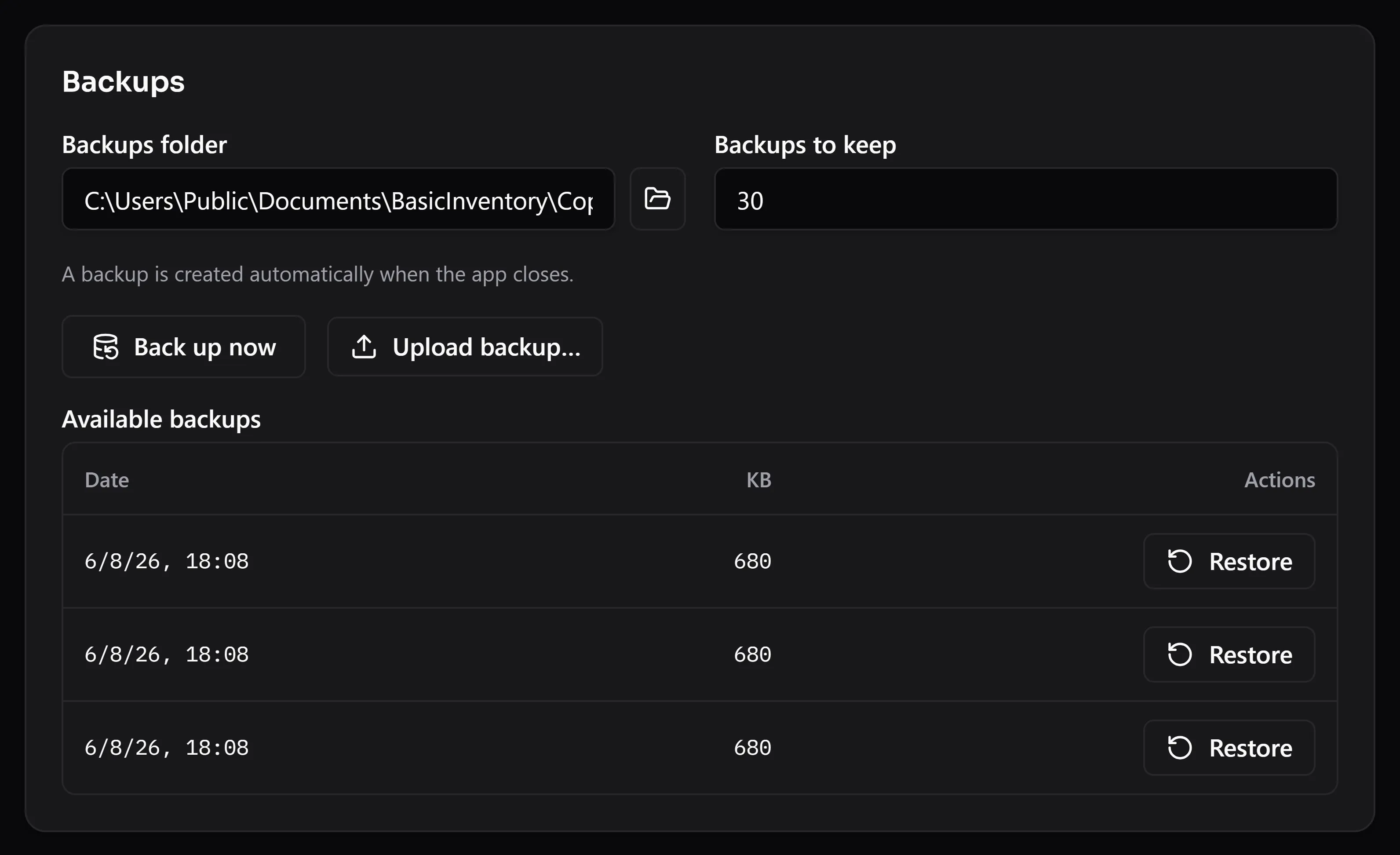
One local database file. Back it up where you like; nobody can revoke it.
You also get independence from the vendor’s future. A subscription tool can be discontinued, acquired, repriced or sunset, and you move on its schedule. A copy you own keeps running on your PC regardless of what happens to the company — which, for a small business that just needs stock to work, is worth a lot.
Even the AI is included, with no monthly fee to us
Here’s the part people assume must be a subscription: the optional AI assistant. It isn’t. It’s included in the one-time price, and it runs on your own provider key — OpenAI, Anthropic, Gemini or OpenRouter — so the per-question cents are billed to your account by them, not rented to you by us. We take no cut and there’s no recurring fee for it. If you never switch it on, you’ve lost nothing; if you do, you pay the model maker directly for exactly what you ask. That’s the no-subscription principle applied even to the one feature everyone expects to be metered.
Who each model suits
- One-time purchase suits an owner-run shop, a small distributor or a workshop that needs a stock tool to just work, offline, on one PC, without a monthly bill or a data-exit worry.
- A subscription suits a growing team that needs multi-user access, hosted collaboration, and a vendor continuously funded to expand the product.
BasicInventory is deliberately the first kind. It’s single-user and Windows-only by design, and it doesn’t pretend to be the second — which is exactly why the one payment makes sense. If a spreadsheet is where you are now, inventory software vs Excel is the honest comparison of when it’s time to move; and if keeping your data on your own machine is the appeal, offline inventory software covers why that matters.
The cheapest way to decide is the demo: the whole application in your browser, no payment and nothing to cancel, so you can judge the tool before you judge the model.